Most safety meetings fail before they start. Supervisors pull up a generic PDF, read bullet points in a monotone voice, and send crews back to work—checking a box, not changing behavior. Free safety toolbox talks are everywhere online, but quality, relevance, and engagement are often missing. The real issue isn’t access—it’s usability. Just because a toolbox talk is free doesn’t mean it’s effective.
A good toolbox talk doesn’t just inform—it sparks awareness, prompts discussion, and fits the actual work being done that day. When done right, these brief safety huddles reduce incidents, reinforce accountability, and build a safety-first culture. The best resources combine clarity, adaptability, and real-world relevance—all without a price tag.
What Are Safety Toolbox Talks (And Why “Free” Isn’t Enough)
A safety toolbox talk is a short, informal safety meeting—typically 10 to 15 minutes—held at the job site before work begins. They focus on one specific hazard, procedure, or safety practice. Topics range from fall protection and electrical safety to ergonomics and weather-related risks.
The “free” part is easy to find. Google “safety toolbox talks free,” and you’ll see hundreds of PDFs, zip files, and downloadable templates. But here’s the catch: most are outdated, too generic, or poorly structured for real field use.
A free talk about “slips, trips, and falls” that doesn’t mention wet concrete cleanup or icy ladder rungs on a roofing job isn’t useful—it’s noise. The best free resources are those tailored to your industry, updated regularly, and designed to encourage interaction, not passive listening.
Common mistakes with free toolbox talks: - Using the same talk for every crew, regardless of task - Reading directly from a script without discussion - Failing to document attendance or topics covered - Ignoring feedback from workers on what’s actually risky
A toolbox talk should feel like a conversation, not a lecture. And the best free tools make that possible.
Top 5 Sources for High-Quality Free Safety Toolbox Talks
Not all free resources are created equal. The following sources deliver practical, well-structured, and regularly updated toolbox talks—without requiring a subscription or credit card.
1. OSHA Official Website The U.S. Occupational Safety and Health Administration offers free safety talks aligned with federal standards. Pros: Authoritative, compliant, and topic-specific Cons: Can be bureaucratic in tone; less interactive Best for: Compliance-driven industries like construction and manufacturing
2. Canadian Centre for Occupational Health and Safety (CCOHS) CCOHS provides a robust library of printable toolbox talks in English and French. Pros: Multilingual, includes discussion questions, industry-specific Cons: Some content requires free registration Best for: Canadian operations or bilingual teams

3. SafetyInfo.com A long-standing safety resource site with over 200 free toolbox talks. Pros: Large library, downloadable in Word format (editable), covers niche topics Cons: Site design is dated; ads can be intrusive Best for: Supervisors who need customizable templates fast
4. HSE UK (Health and Safety Executive) The UK’s HSE offers free safety briefings and topic guides. Pros: Clear language, visual aids, risk assessment integration Cons: Geared toward UK regulations; minor adaptation needed for U.S. teams Best for: International contractors or best-practice benchmarking
5. Industry-Specific Associations Groups like the Associated General Contractors (AGC), National Safety Council (NSC), and Electrical Safety Foundation International (ESFI) publish free, targeted talks. Pros: Highly relevant, often include real incident examples Cons: Limited to members in some cases Best for: Trade-specific risks (e.g., electrical, welding, scaffolding)
Pro Tip: Always verify that free talks align with your local regulations. OSHA standards differ slightly from provincial or international rules.
How to Customize Free Toolbox Talks for Real Impact
Downloading a free PDF is step one. Making it work for your team is step two—and the most overlooked.
A one-size-fits-all approach fails because hazards change daily. A roofing crew on a windy morning faces different risks than a maintenance team repairing a conveyor belt.
- Customization workflow:
- Choose a relevant topic based on the day’s work (e.g., “Working at Heights” for roofers).
- Edit the content to include site-specific risks (e.g., “Watch for loose shingles near the east parapet”).
- Add local examples—reference a near-miss from last week or a close call from a similar job.
- Insert open-ended questions like: “What would you do if your harness anchor failed?”
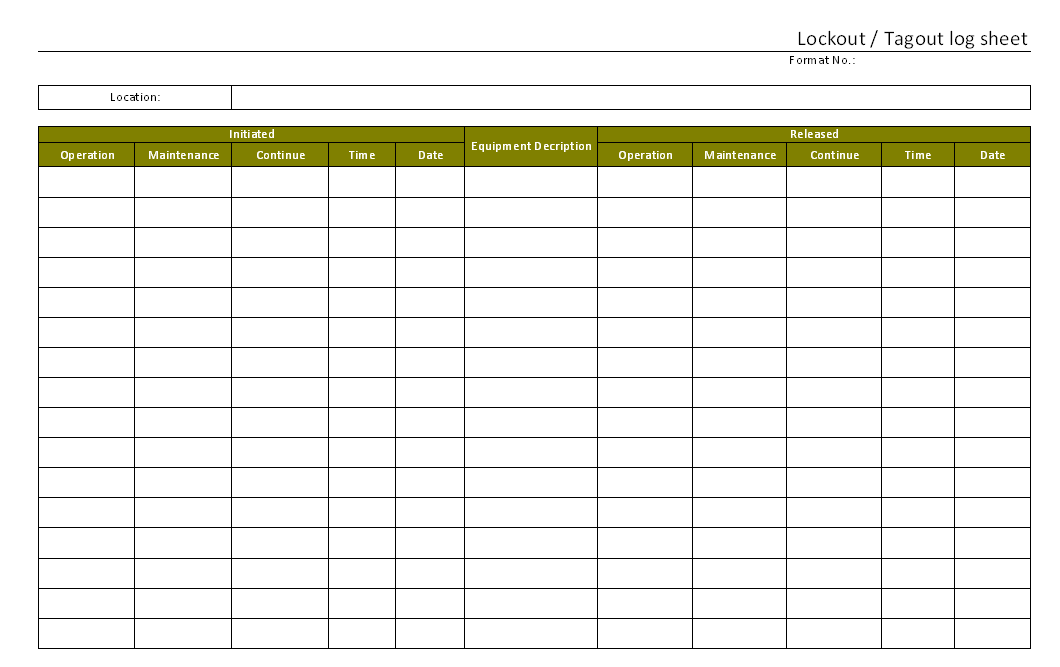
- Include a sign-off sheet for accountability and OSHA recordkeeping.
Example: A free “Lockout/Tagout” talk from OSHA lists general steps. But your version should name the exact machines being serviced, reference your site’s LOTO procedures, and confirm tag locations.
Most free talks give you 70% of what you need. The remaining 30%—context, detail, engagement—is up to you.
Common Topics in Free Safety Toolbox Talks (With Use Cases)
Generic topics dominate free libraries. But relevance determines effectiveness. Here are the most common—and how to make them matter.
1. Fall Protection Use case: Roofer preparing to work on a sloped roof. Customize talk to include: anchor point checks, harness inspection steps, weather impact on grip. Add: “Who here has seen a fall protection failure? What did we learn?”
2. Hand and Power Tools Use case: Electrician using a reciprocating saw in a tight space. Focus on: guarding, cord management, pinch points. Add: “Show me your PPE setup before we start.”
3. Hazard Communication (HazCom) Use case: Maintenance worker handling cleaning solvents. Highlight: SDS location, ventilation needs, skin contact risks. Add: “Where’s the nearest eyewash station?”
4. Electrical Safety Use case: Crew working near overhead lines. Emphasize: minimum clearance distances, PPE requirements, emergency response. Add: “What’s our shutdown procedure if a truck hits a wire?”
5. Heat Stress Use case: Landscapers in summer. Include: hydration breaks, buddy system, symptoms of heat exhaustion. Add: “Point to the cooling station on site.”
Free talks often miss these real-time details. Customize to close the gap.
The Hidden Cost of “Free”: What Most Overlook
Free doesn’t mean zero cost. Time, effort, and risk exposure still apply.
Limitations of free toolbox talks: - No version control: Outdated content stays in circulation. - No tracking: Hard to prove compliance during audits. - No engagement metrics: You can’t measure whether the message landed. - Legal risk: Using unverified content may not meet OSHA documentation standards.
Some companies use free talks to avoid investing in better systems. But a $5-per-user safety app with tracking, reminders, and digital sign-offs often pays for itself in reduced incidents.
Still, for small teams or tight budgets, free is viable—if you add structure. Create a master folder, label by topic and date, and assign supervisors to update and deliver talks weekly.
Making Free Talks Work: A Practical Workflow
To avoid box-checking and drive real safety improvement, follow this routine:
- Every Friday: Supervisor selects next week’s topics based on scheduled work.
- Download or pull a free talk from a trusted source (e.g., OSHA or SafetyInfo).
- Customize: Insert job-specific risks, photos, questions.
- Print or project: Use on-site during the huddle.
- Facilitate discussion: Ask, don’t tell. “What’s one thing that worries you about this task?”
- Document: Sign attendance sheet, file for 5 years (OSHA requirement).
- Review quarterly: Audit which topics reduced incidents.
Real-world example: A plumbing contractor in Ohio reduced hand injuries by 40% after customizing a free “Glove Use” talk to include photos of cuts from PVC pipe edges—something generic talks never mentioned.
Final Advice: Free Is a Starting Point, Not the Finish Line
Safety toolbox talks free of charge are valuable—but only if used with intent. The goal isn’t to download and forget. It’s to inform, engage, and protect.
Prioritize quality over quantity. One well-run, site-specific talk each week beats five robotic readings of generic PDFs.
Choose reputable sources. Edit for relevance. Encourage dialogue. Document everything.
When free resources are treated as raw material—not the final product—they become powerful tools for real change.
Start today: Pick one free talk, customize it for tomorrow’s crew, and run it like a pro. Safety isn’t about perfection. It’s about progress.
Frequently Asked Questions
Where can I find free safety toolbox talks in PDF format? OSHA, CCOHS, and SafetyInfo.com offer downloadable PDFs covering common and industry-specific topics.
Are free toolbox talks OSHA compliant? They can be, but only if they address actual workplace hazards and are properly documented with attendance records.
How long should a toolbox talk last? Ideally 10 to 15 minutes. Longer sessions lose engagement and disrupt workflow.
Can I edit free toolbox talks for my team? Yes—editing is recommended. Customize content to reflect your site, equipment, and risks.
Do I need to sign off on every toolbox talk? Yes. Signed attendance sheets are required for OSHA compliance and audit readiness.
What’s the difference between a safety meeting and a toolbox talk? Toolbox talks are short, task-specific, and held at the job site. Safety meetings are longer, broader, and often held off-site.
How often should toolbox talks be held? Weekly is ideal. Daily for high-risk tasks like excavation or confined space entry.
FAQ
What should you look for in Safety Toolbox Talks Free: Practical Resources for Teams? Focus on relevance, practical value, and how well the solution matches real user intent.
Is Safety Toolbox Talks Free: Practical Resources for Teams suitable for beginners? That depends on the workflow, but a clear step-by-step approach usually makes it easier to start.
How do you compare options around Safety Toolbox Talks Free: Practical Resources for Teams? Compare features, trust signals, limitations, pricing, and ease of implementation.
What mistakes should you avoid? Avoid generic choices, weak validation, and decisions based only on marketing claims.
What is the next best step? Shortlist the most relevant options, validate them quickly, and refine from real-world results.